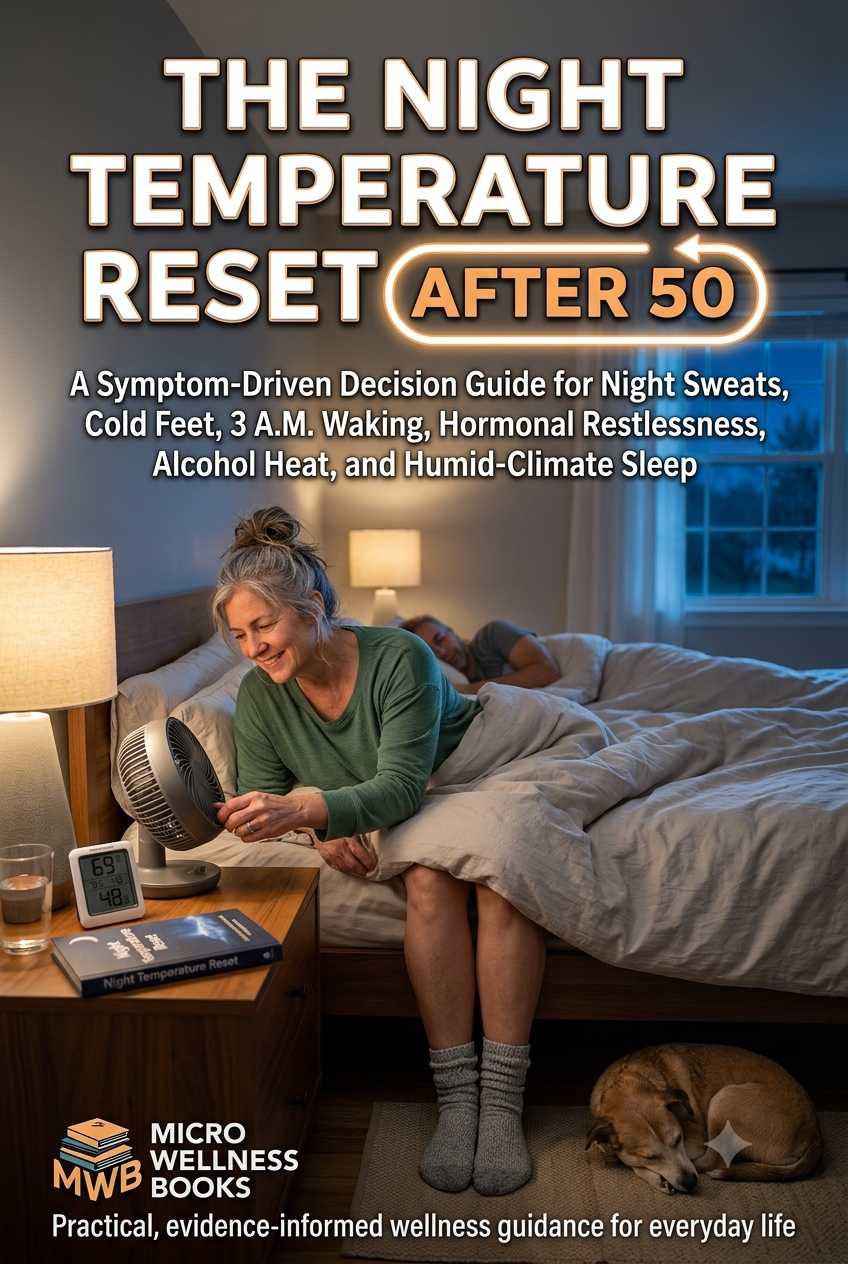
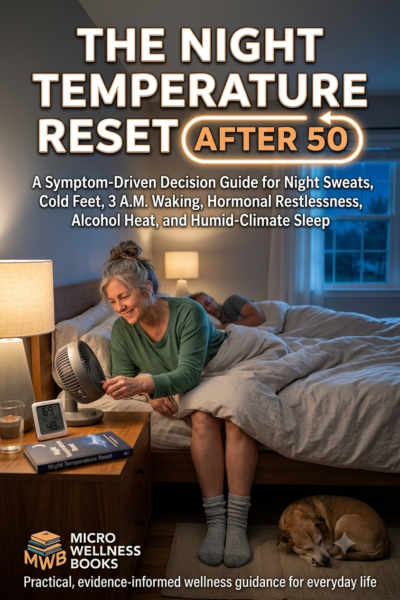
Stop Guessing. Isolate Your Sleep Mismatch.
A bedroom can feel perfectly comfortable to your partner and still be completely wrong for your body. Instead of adjusting the entire house or freezing out everyone else, this guide helps you decode exactly what your body is experiencing.
Recent field research shows that older adults actually sleep most efficiently across a much broader range—specifically 68°F to 77°F. The key isn’t chasing a magical number on the wall; it’s learning how to recognize patterns and change one single variable at a time.
What You’ll Learn to Fix:
Waking Damp or Sweaty: Pinpoint whether your mattress is trapping heat or if behavioral triggers are causing midnight temperature spikes.
The Warm-Feet Paradox: Discover why warming your feet locally can open surface blood vessels and cool your internal core temperature for faster sleep onset.
The 3 A.M. Alarm: Break down what a middle-of-the-night awakening actually means based on whether you wake up hot, cold, hungry, or fully alert.
Alcohol Heat Recovery: Learn how alcohol shifts your sleep architecture and creates sneaky overheating issues in the second half of the night.
Humid-Climate Dynamics: Understand why managing relative humidity at mattress height is far more effective than just blasting the AC.
Menopause & Vasomotor Instability: Real, low-light bedside strategies to handle sudden heat waves and the subsequent rebound chills without fully waking up.
The Four Layers of Your Sleep Microclimate
Microclimate LayerWhat It HandlesCommon Failure Points
Room AirOverall heat load and your body’s ability to shed heatStagnant air or rooms that cook overnight
Humidity & AirflowEvaporation of sweat and your perceived warmthHigh humidity (>50%) trapping sweat on skin
Bedding & MattressHeat trapped immediately against your bodyMemory foam or protectors locking in heat
Body & BehaviorInternal heat production and metabolic triggersLate heavy meals, alcohol, or changing hormones
Complete Book Chapter Blueprint
Introduction: Why temperature becomes a sleep problem after 50
Chapter 1: Your thermal sleep system after 50
Chapter 2: The master symptom-to-protocol decision tree
Chapter 3: Waking sweaty or with damp bedding
Chapter 4: Cold feet at bedtime and the warm-feet paradox
Chapter 5: Overheating after alcohol
Chapter 6: Waking at 3 a.m. and feeling too hot, too cold, or fully alert
Chapter 7: Restless sleep during menopause
Chapter 8: Men, hormones, and the “andropause” myth
Chapter 9: Poor sleep in humid climates
Chapter 10: Bedding, mattress heat, partners, pets, and the sleep microclimate
Chapter 11: The seven-night troubleshooting laboratory
Chapter 12: When temperature hacks are not enough
Chapter 13: The 30-day quick-start plan
Conclusion: Build a bedroom that responds to your body
Appendices: Trackers, checklists, and selected references
Frequently Asked Questions
Is this guide full of medical advice?
No, this manual is strictly for educational and informational purposes. Severe or recurring patterns like drenching night sweats, chronic insomnia, or gasping for air require an evaluation by a qualified medical professional. This book acts as a practical lifestyle companion to eliminate environmental roadblocks while you keep up with proper clinical care.
What format will I get?
This is an instant digital download delivery. You will receive a clean, beautifully formatted PDF copy right after checkout that you can open instantly on any tablet, phone, or computer.
Does this book require me to buy expensive cooling gadgets?
Not at all. The entire troubleshooting philosophy relies on zero-cost or low-cost adjustments—like altering layer combinations, untucking the foot of your sheets, utilizing cheap fan placements, or introducing loose bed socks.


Reviews
There are no reviews yet.